
CPAP vs BiPAP: What's the Difference and Which Do You Need?
3 min read
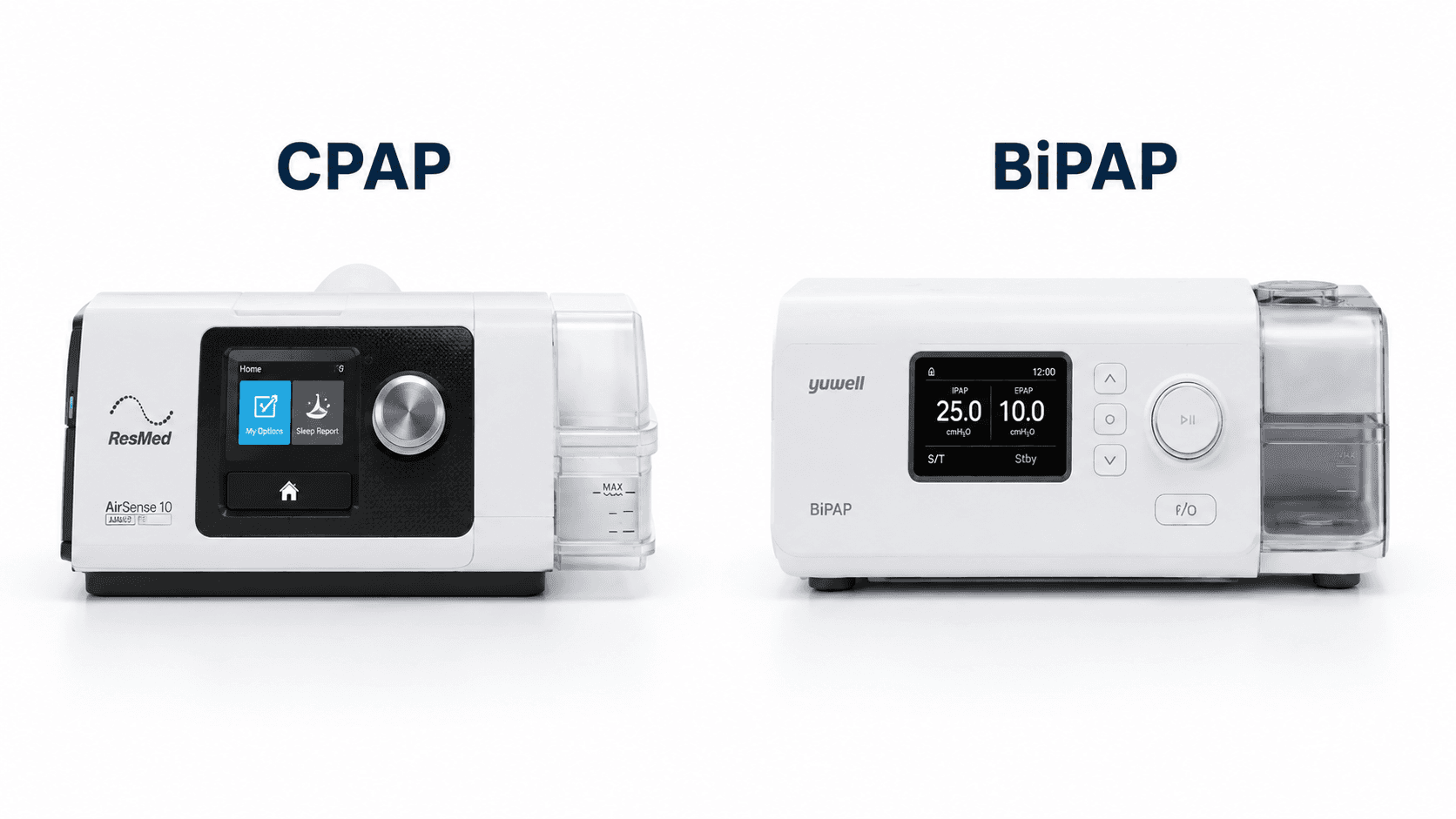
If you've been diagnosed with sleep apnea, your doctor may have mentioned either CPAP or BiPAP therapy — and it's easy to assume they're the same thing. They're not. Here's a clear breakdown of what separates them.
The Core Difference: Pressure Delivery
The fundamental difference comes down to how air pressure is delivered:
- CPAP (Continuous Positive Airway Pressure) delivers a single, constant pressure throughout your entire breathing cycle — the same pressure whether you're inhaling or exhaling.
- BiPAP (Bilevel Positive Airway Pressure) delivers two separate pressures — a higher one for inhaling, a lower one for exhaling — making the breathing experience feel more natural for some patients.
Comfort During Exhalation
This is usually the biggest practical difference patients notice. With CPAP, some people find it takes effort to breathe out against the constant pressure, especially at higher settings. BiPAP automatically lowers the pressure the moment you exhale, which many patients find significantly more comfortable — particularly those on higher pressure prescriptions.
Who Is CPAP Best For?
CPAP is the most common, most widely prescribed treatment for mild to moderate obstructive sleep apnea. It's simpler, generally more affordable, and effective for the majority of sleep apnea patients. If you're newly diagnosed, your sleep specialist will very likely start you on CPAP first.
Explore our range of CPAP machines from trusted brands like ResMed and Philips Respironics.
Who Is BiPAP Best For?
BiPAP is typically recommended when:
- CPAP pressure feels too difficult to tolerate, especially on exhale
- You have moderate-to-severe sleep apnea requiring higher pressure settings
- You have a co-existing condition like COPD or a neuromuscular disorder affecting your breathing
Learn more in our detailed guide: What is a BiPAP Machine and How Does It Work?
Can You Switch From CPAP to BiPAP?
Yes — many patients start on CPAP and switch to BiPAP later if they find the constant pressure uncomfortable, particularly at higher prescribed levels. This switch should always be guided by your doctor or sleep specialist, ideally supported by a follow-up sleep study.
Which One Should You Choose?
Ultimately, this decision belongs to your doctor based on your specific sleep study results and medical history — this article is meant to help you understand the conversation, not replace it. Once you have a prescription, our team at Respiratory Equips can help you find the exact genuine, warrantied machine that matches it.
Browse our full range of CPAP and BiPAP machines or request a free consultation and our specialists will help you choose the right equipment.